![virtual-office-space-hot-desk-servcorp-thailand.jpg]()
A shared workspace is an office used by several businesses and independent professionals at the same time. An operator runs the space, and members pay for a desk, a private room or a set amount of access instead of signing a lease of their own. Meeting rooms, the kitchen and other facilities are shared by everyone who works there.
You will also see the idea described as a coworking space or shared office space. Inside one centre, the formats can run from a desk you use for a day to a lockable office for a small team, and which one suits you depends on how many people need space, how often they come in and how much of their work needs a closed door.
How Membership Works in a Shared Centre
The operator carries the costs and chores that come with a conventional office: fitting out the floor, buying furniture, arranging internet and phone lines, cleaning and maintenance. Members move into a space that is already running, with shared facilities either included in the membership or booked as needed.
Memberships can run month to month. That makes it easier to add a desk when someone joins, give one up when a project ends, or test the Thai market from a Bangkok base before committing to an office of your own. Apart from your own colleagues, the people on the floor work for other companies. That mix is the main difference from an office a business has to itself.
Desk and Office Formats in a Shared Workspace
Operators sell space in a handful of formats. The names vary slightly from one operator to the next, but the arrangements are broadly the same.
Hot Desks
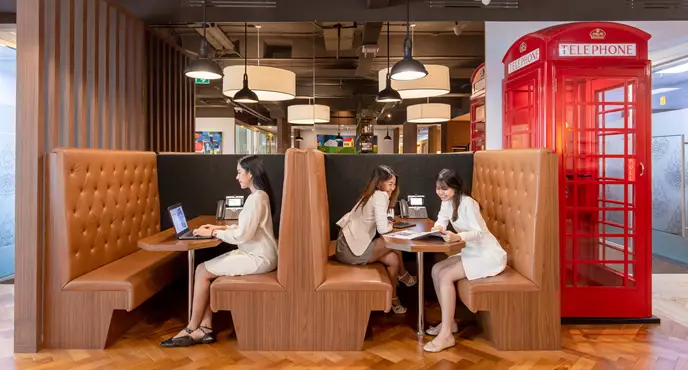
A hot desk is any free seat in the shared area, taken on arrival and cleared at the end of the day. Nobody has a fixed place, so you keep your things with you, or in a locker where the centre provides one. Hot desks suit freelancers, remote employees and anyone who comes in a few days a week and values flexibility over a familiar seat.
Dedicated Desks
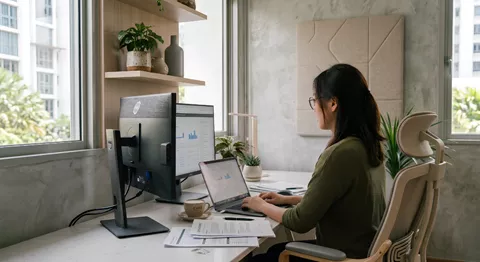
A dedicated desk is yours alone, in the same shared area. You can leave a monitor set up, keep papers in lockable storage where it is offered, and find the seat waiting whenever you arrive. This format suits someone who is in most days and wants a settled routine, or two colleagues who prefer to sit together.
Private Offices Inside a Shared Centre
Some centres also have furnished private offices along the same corridors as the shared desks, from rooms for one or two people to space for a larger team. The office is lockable and used only by your team, while the reception, kitchen and meeting rooms remain shared with the rest of the centre. It suits teams that work together every day or handle confidential material.
Day Access and Lounge Memberships
Some operators sell access by the day, or memberships that include a few days of desk use a month and member rates for meeting rooms. These suit people who work mostly from home but need a professional setting for a day of focused work or the occasional client meeting.
What Members Share, and What Is Booked Separately
Much of what a membership pays for is shared: furniture, internet, printers, a kitchen with drinks, lounges and phone booths for private calls. Staffed centres also have a reception team that greets visitors and takes in deliveries. Meeting rooms and boardrooms sit alongside these, booked as needed.
What is included varies from one operator and one membership to the next. Meeting room hours, storage, round-the-clock access, call answering and secretarial help can be part of the membership, offered as add-ons or charged when used, so it is worth asking for the full list of inclusions before comparing memberships.
Servcorp's coworking space in Bangkok is one example, offering hot desks, dedicated desks and private offices across four Bangkok office buildings. Hot desk members have access during business hours, with 24/7 access as an option, and a dedicated desk comes with 24/7 access and lockable storage. On-site bilingual secretaries and IT support are available, meeting rooms and boardrooms are booked on a pay-as-you-go basis when needed, and there is no long-term lease.
Coworking, Serviced Offices and Other Names for Shared Space
Operators and listing sites use several labels for this kind of space, and not always in the same way. Coworking usually means the open, desk-based side of a centre. Its emphasis on community goes back to the origins of coworking, when the first official coworking space opened to give people working from home a more social alternative.
Serviced office is the usual name for a furnished private office run by an operator, and business centre is another label you may see for a floor run this way. Flexible workspace is the umbrella term, covering coworking and serviced offices alike and pointing to the short, adjustable terms they have in common.
Shared office space is the loosest label of the group and can refer to any of these. When a listing uses it, the details of the membership tell you more than the name.
Choosing Between Open Desks and a Private Office
Open desks can work well while a business is one or two people, or a team whose members come in on different days. The balance shifts when the same group needs to sit together most of the week, talk through confidential matters or keep equipment and files set up between visits.
A private office in a shared centre meets those needs while keeping the shared facilities on hand. Some teams combine the two, with a small office for the people who are in every day and desk memberships for colleagues who come in less often.
More client visits and a growing team are two of the signs a business is ready for a serviced office. For your own team, a typical week makes a useful test: count who comes in, how many of their conversations need privacy and how many meetings you host, then set that against what a desk membership allows.
Frequently Asked Questions